Observables
IOT-based Video Surveillance Security Solution
Project overview
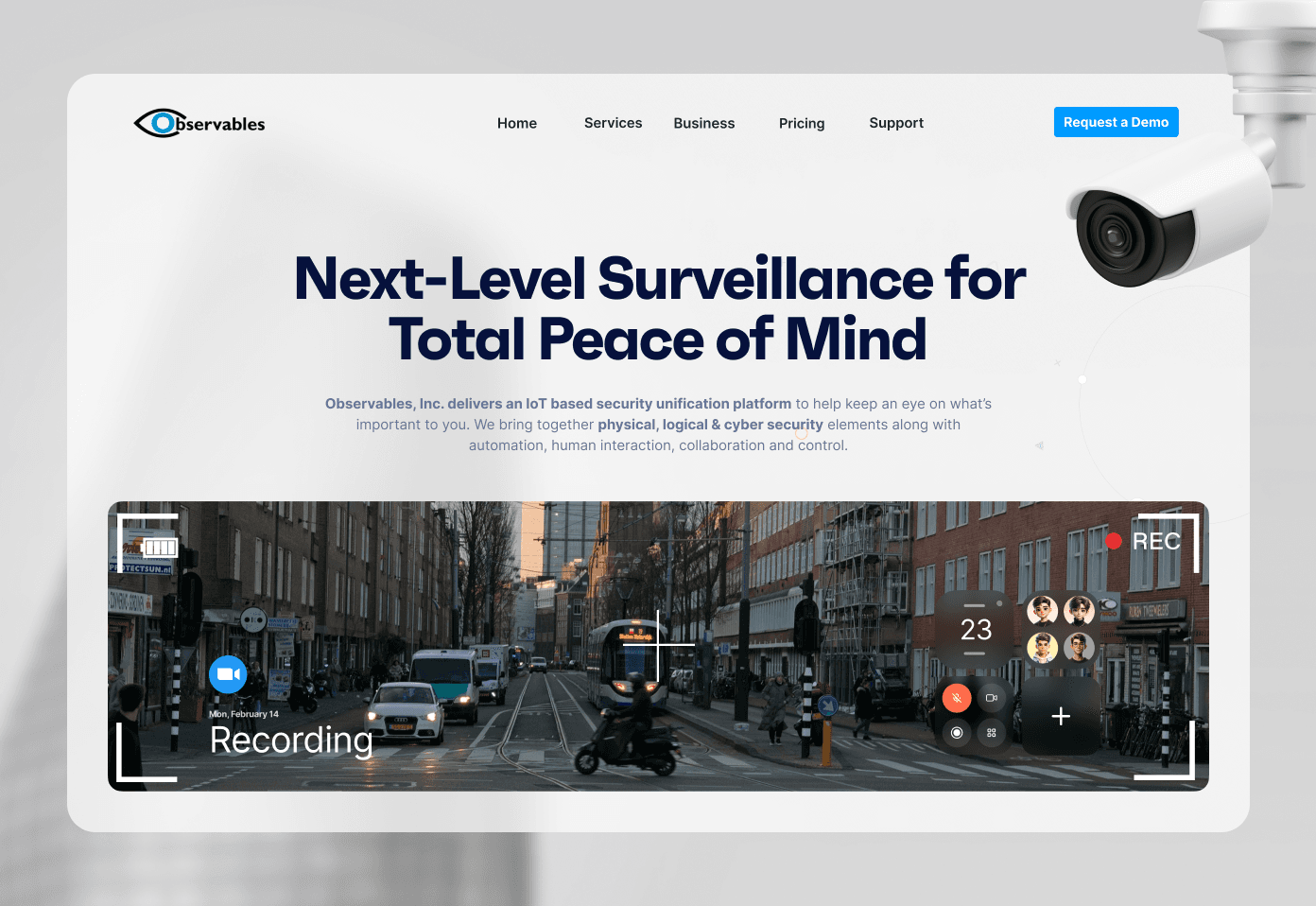
Observables is IOT-based Video Surveillance Security Solution. A comprehensive range of software-defined security devices and services. Built with high standards for performance, security, and intuitive user experiences, the platform is engineered to support mission-critical workflows and seamless scale.
What was the problem or pain point
Client Dilemma & Technical Bottleneck
Observables develops advanced cloud-managed physical security and network hardware gateways (AlwaysON) deployed across commercial properties, enterprise campuses, and critical infrastructure. The client needed to upgrade their central management console to handle real-time WebRTC video surveillance streaming, IoT sensor telemetry ingestion, and cellular failover alerting from thousands of active hardware units without latency bottlenecks or server disconnects during network outages.
What we suggested to the client
Solid Sphere Architectural Recommendation
Solid Sphere proposed building a resilient, event-driven IoT management architecture. We recommended using MQTT for ultra-low-overhead device telemetry, WebRTC for sub-second video feed tunneling through firewalls without port forwarding, and an interactive React-based operational dashboard backed by Python microservices that dynamically map device health, cellular signal strength, and perimeter intrusion events.
What made this project challenging
Streaming ultra-low-latency HD video surveillance feeds from distributed IoT gateway hardware
Managing continuous edge device health monitoring, firmware over-the-air (FOTA) updates
Enforcing strict access control and encrypted video storage compliant with physical security standards
Triggering instant AI-powered motion, intrusion, and perimeter breach alert notifications
What was implemented and how it was implemented
Step-by-Step Technical Execution
We developed a centralized management cloud platform using React on the frontend and Python with asyncio on the backend. We configured an AWS IoT Core broker utilizing MQTT to maintain persistent, lightweight connections with deployed AlwaysON hardware gateways, receiving sensor alarms, port status, and cellular signal telemetry every few seconds. For security surveillance, we implemented a WebRTC signaling server that establishes peer-to-peer video streams between on-premise IP cameras connected to the gateway and the security operator's browser, bypassing restrictive enterprise NATs and firewalls. We created an interactive geospatial map interface displaying gateway status across multiple facilities, with instant push alerts and automated webhook triggers when tamper sensors or network drops occur. The platform was packaged into Docker containers for scalable Kubernetes orchestration.
How we delivered
Built responsive cloud video management software (VMS) with multi-camera grid playback
Engineered WebRTC peer-to-peer video streaming pipeline minimizing cloud bandwidth overhead
Developed MQTT IoT command-and-control plane for remote camera reboot, zoom, and sensor relays
Implemented automated event timeline indexing allowing security teams to jump to critical incidents
What did we use to implement it
Technology Stack & Technical Rationale
React delivered a high-density, real-time security command dashboard with live video grid playback and interactive telemetry widgets. Python with FastAPI/asyncio provided high-speed event processing and WebRTC signaling. MQTT over AWS IoT Core handled secure, low-bandwidth device-to-cloud telemetry. WebRTC enabled ultra-low latency peer-to-peer video streaming without third-party plugins. Docker ensured consistent containerized deployments across multi-region cloud clusters.
Key outcomes
Under 250ms live video streaming latency worldwide
Over 10,000 security gateways managed on platform
Zero unauthorized access incidents
99.95% cloud telemetry uptime
Have a project like this?
Share your goals and constraints. We'll respond with next steps and a practical proposal.