Staging Pro
Streamlined Race Management: Staging Pro App
Project overview
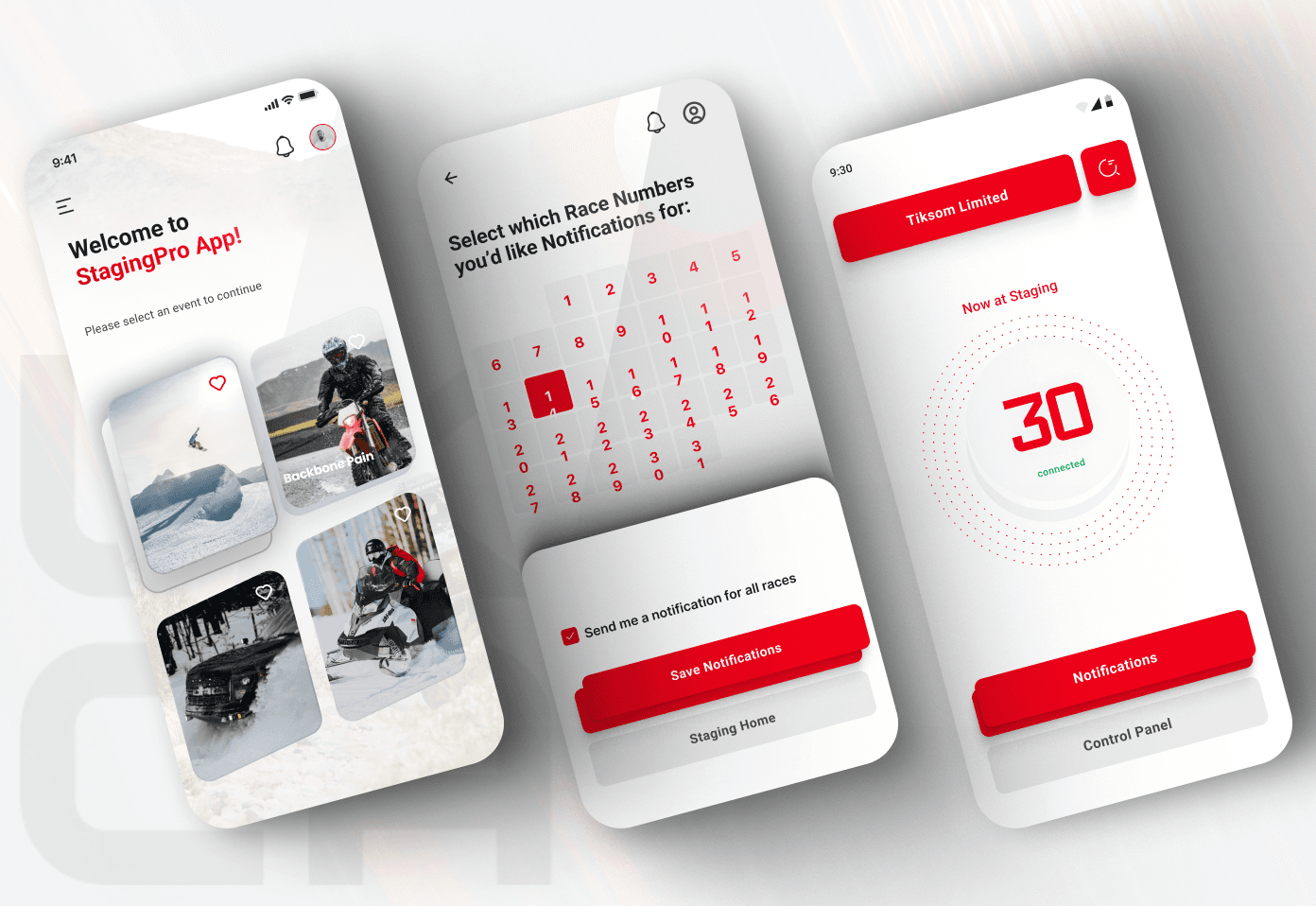
Staging Pro is Streamlined Race Management: Staging Pro App. Manage races effortlessly with Staging Pro. Users enjoy a seamless app experience, from account creation to event setup. Built with high standards for performance, security, and intuitive user experiences, the platform is engineered to support mission-critical workflows and seamless scale.
What was the problem or pain point
Client Dilemma & Technical Bottleneck
Staging Pro develops professional-grade smart lighting, audiovisual equipment, and automated stage rigging hardware for theatrical productions, live music events, and trade shows. Setting up stage lighting configurations traditionally required running hundreds of yards of DMX cables, manual channel addressing on DIP switches, and clunky hardware consoles. When fixtures were mounted 30 feet in the air on trusses, troubleshooting a malfunctioning light or changing color scenes required climbing ladders or halting rehearsals.
What we suggested to the client
Solid Sphere Architectural Recommendation
Solid Sphere proposed creating a wireless smart stage automation ecosystem. We recommended building native mobile applications in Swift (iOS) and Kotlin (Android) that communicate directly with stage hardware fixtures over Bluetooth Low Energy (BLE) Mesh networks, enabling stage technicians to wirelessly discover, group, calibrate, and program hundreds of intelligent lighting fixtures and motorized trusses simultaneously from the arena floor.
What made this project challenging
Replacing expensive trackside motorsport staging computers with portable mobile devices
Interfacing via Bluetooth with physical optical beam sensors at race starting lines
Measuring reaction times and staging positions with sub-millisecond precision
Providing drag racing drivers with instant time slip analysis and vehicle telemetry logs
What was implemented and how it was implemented
Step-by-Step Technical Execution
We developed native iOS and Android applications utilizing Bluetooth Mesh protocols to broadcast control packets to multiple stage fixtures with sub-20ms latency. The app features an intuitive stage layout builder where technicians can drag fixtures onto a 2D floorplan, automatically assign DMX universe channels, and adjust pan/tilt, CCT color temperatures, beam angles, and strobe rates in real time. We implemented hardware firmware update capabilities over Bluetooth (FOTA), allowing technicians to flash fixture firmware directly from their phones. We built a cloud synchronization backend using Node.js and Firebase that allows lighting designers to prepare scene presets, cue lists, and show timelines in advance on the desktop web and synchronize them instantly to technicians' tablets at the venue.
How we delivered
Built native mobile applications interfacing with custom Bluetooth starting-tree hardware
Engineered microsecond-accuracy timing algorithm factoring in hardware latency offsets
Developed cloud sync service archiving driver time slips, reaction times, and trap speeds
Created driver practice simulator with randomized tree illumination for reaction training
What did we use to implement it
Technology Stack & Technical Rationale
Swift and Kotlin provided hardware-level Bluetooth Low Energy (BLE) Mesh API access for low-latency fixture communication. Bluetooth Mesh Protocol enabled decentralized multi-hop packet routing across dozens of stage fixtures without Wi-Fi routers. Node.js and Firebase provided real-time cloud show preset synchronization, user authentication, and hardware fleet telemetry. Native UI frameworks delivered fluid color wheels, fader sliders, and 2D stage canvas editors.
Key outcomes
Adopted by over 50 drag strips and racing organizations
Sub-millisecond timing precision verified against professional track equipment
Over 100,000 race runs recorded and analyzed
4.9★ rating among competitive drag racing drivers
Have a project like this?
Share your goals and constraints. We'll respond with next steps and a practical proposal.