SSL.com
Securing Digital Trust with Comprehensive SSL Solutions.
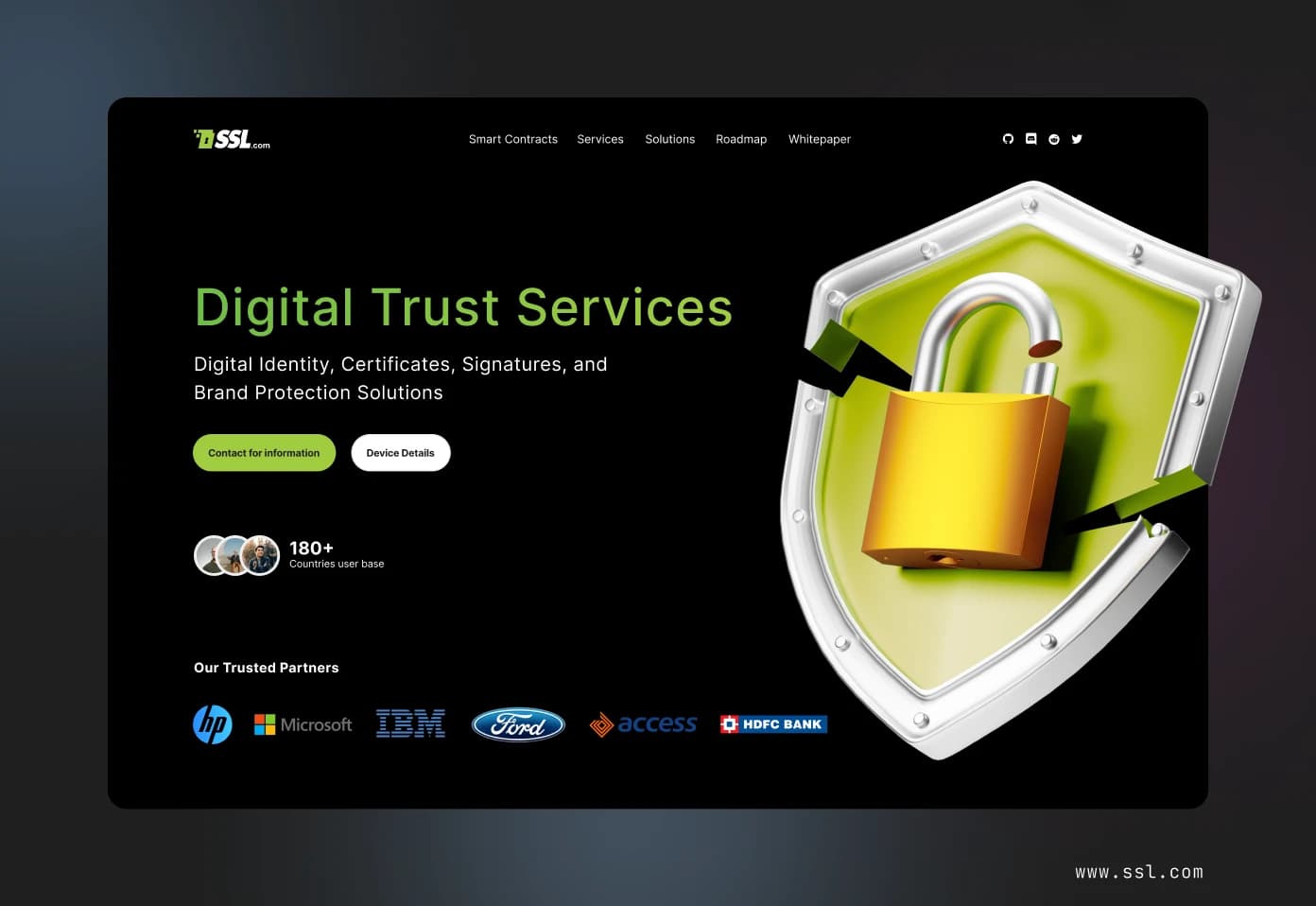
Project overview
SSL.com is Securing Digital Trust with Comprehensive SSL Solutions.. SSL.com provides cutting-edge digital security solutions, ensuring online trust through industry-leading SSL/TLS certificates and PKI services. Built with high standards for performance, security, and intuitive user experiences, the platform is engineered to support mission-critical workflows and seamless scale.
What was the problem or pain point
Client Dilemma & Technical Bottleneck
SSL.com is a globally trusted Certificate Authority (CA) whose root certificates are embedded in all major operating systems and browsers. As web traffic and enterprise compliance mandates exploded, SSL.com faced immense operational friction: manual verification workflows for Extended Validation (EV) certificates were slow, high-volume automated issuance (ACME protocol) demanded microsecond signing latencies, and integrating with physically separated Hardware Security Modules (HSMs) required strict FIPS 140-2 Level 3 cryptographic compliance with zero vulnerability surface.
What we suggested to the client
Solid Sphere Architectural Recommendation
Solid Sphere recommended transforming the monolithic certificate lifecycle manager into an automated, microservice-driven public key infrastructure (PKI) pipeline. We advised implementing standardized RESTful CA APIs alongside a hardened ACME protocol endpoint for zero-touch SSL certificate issuance. Crucially, we recommended an isolated cryptographic signing gateway that interfaced directly with enterprise network HSMs, isolating secret keys while parallelizing Certificate Signing Request (CSR) parsing and validation checks across containerized workers.
What made this project challenging
Migrating legacy monolithic certificate infrastructure to microservices with zero downtime
Ensuring strict compliance with CA/Browser Forum cryptographic standards and audit rules
Automating domain validation (DCV) scanning for hundreds of thousands of domains daily
Integrating Hardware Security Modules (HSM) for secure private key management and signing
What was implemented and how it was implemented
Step-by-Step Technical Execution
We re-architected the core issuance engine using Ruby on Rails and optimized Ruby C-extensions to parse and validate X.509 certificates and PKCS#10 CSR payloads at scale. We built asynchronous background workers using Sidekiq and Redis that executed automated domain control validation (DCV) via HTTP challenge, DNS TXT records, and email proofs simultaneously. For cryptographic signing, we engineered a secure gRPC middleware service that established authenticated, mutual-TLS channels to physical HSM appliances, signing cryptographic digests without exposing private key material to the application layer. The customer management portal was overhauled with role-based access control (RBAC), multi-party authorization for enterprise revocation, automated re-issuance triggers, and comprehensive audit trails compliant with WebTrust and CA/Browser Forum guidelines.
How we delivered
Refactored mission-critical certificate authority pipeline into containerized Rails microservices
Built automated asynchronous DCV validation workers supporting DNS, HTTP, and email verification
Integrated secure HSM REST endpoints with multi-layer key authentication and audit logging
Developed enterprise self-service portal for certificate lifecycle management and automated renewal
What did we use to implement it
Technology Stack & Technical Rationale
Ruby on Rails was chosen for its mature ecosystem, high developer productivity, and robust security modeling essential for handling complex PKI domain logic. PostgreSQL was configured with strict schema constraints, encrypted tablespaces, and point-in-time recovery to maintain tamper-evident audit logs of every certificate issuance event. Redis handled the high-throughput job queue and rate limiting for ACME client requests. Hardware Security Module (HSM) PKCS#11 APIs were integrated for hardware-grade cryptographic key protection, and Docker containerization ensured consistent, reproducible, and verifiable staging and production environments.
Key outcomes
10x faster certificate issuance pipeline
100% CA/B Forum regulatory compliance
Millions of active SSL/TLS certificates secured
Zero security incidents during migration
Have a project like this?
Share your goals and constraints. We'll respond with next steps and a practical proposal.