Klipworks
Video By Request
Project overview
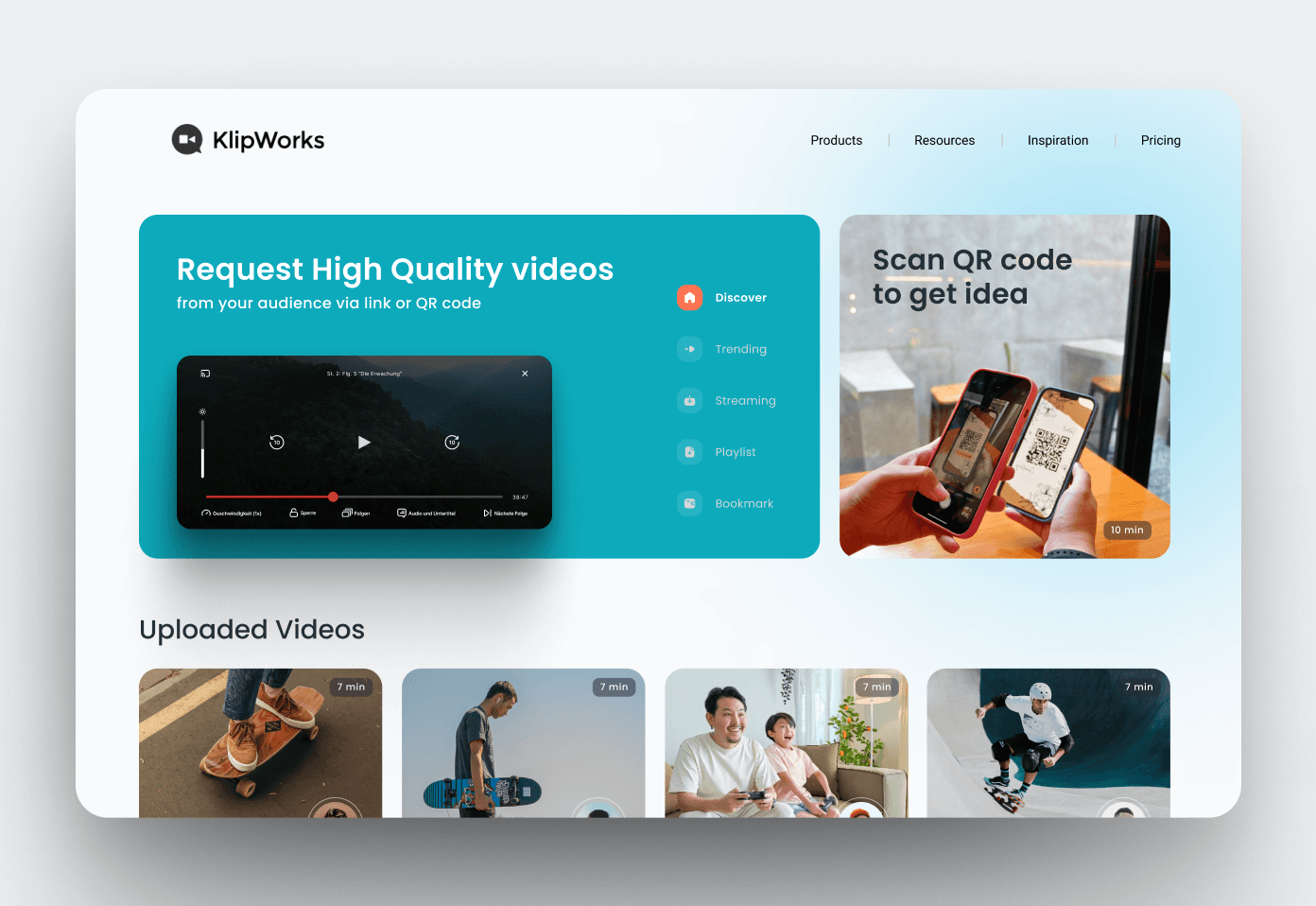
Klipworks is Video By Request. A platform for video content creators to collect user-generated video content. Built with high standards for performance, security, and intuitive user experiences, the platform is engineered to support mission-critical workflows and seamless scale.
What was the problem or pain point
Client Dilemma & Technical Bottleneck
Klipworks is a Danish collaborative mobile video platform designed for journalists, corporate communications teams, and event organizers to crowdsource high-quality video footage from multiple contributors. Collecting, synchronizing, and reviewing raw video clips from dozens of remote contributors on smartphones was chaotic, plagued by lost files, inconsistent video formats, slow cloud uploads, and lack of a collaborative storyboard editor.
What we suggested to the client
Solid Sphere Architectural Recommendation
Solid Sphere recommended building a mobile-first collaborative video production suite: a lightweight mobile app for contributors that can record and upload chunked video files even over intermittent mobile connections, and a cloud-based web studio for editors to assemble, trim, and stitch collaborative video stories in minutes.
What made this project challenging
Crowdsourcing video clips from smartphone users worldwide for professional media productions
Enforcing strict recording guidelines (orientation, audio quality, lighting) directly in the mobile camera
Automating background upload of 4K video footage with seamless pause-and-resume on unstable connections
Providing video editors with instant timeline organization, tagging, and asset management
What was implemented and how it was implemented
Step-by-Step Technical Execution
We engineered the mobile recording app using React Native, implementing a custom camera controller that records video in standardized 1080p codecs and uploads files in background chunks using resilient, resumable multipart S3 upload protocols. For video editors, we built a responsive web studio in React featuring a multi-track timeline editor, clip trimming, audio leveling, and subtitle overlays. On the backend, we constructed a distributed video processing pipeline using Node.js and FFmpeg workers orchestrated on AWS. When an editor finalizes a storyboard, the cloud rendering engine stitches video clips, applies branding watermarks, normalizes audio tracks, and outputs finished MP4 videos in seconds. We integrated WebSockets to provide real-time updates on upload progress and cloud encoding completion.
How we delivered
Built native camera recording interface with real-time audio meters and framing guidelines
Engineered chunked multipart upload client with automated retry and bandwidth throttling
Developed cloud video transcoding pipeline utilizing FFmpeg on AWS for automatic proxy generation
Created collaborative web workspace for creative directors to review, rate, and assemble clips
What did we use to implement it
Technology Stack & Technical Rationale
React Native provided seamless camera hardware access and reliable background video uploads across iOS and Android. React powered the web-based collaborative timeline editor. Node.js managed project collaboration states and WebSocket notifications. FFmpeg served as the core rendering engine for cloud video transcoding, audio mixing, and watermark composition. AWS S3 and CloudFront ensured high-speed, secure video storage and streaming. MongoDB stored flexible video metadata, storyboard sequences, and project notes.
Key outcomes
Over 250,000 user video clips uploaded and processed
Used by major television networks and marketing agencies
Zero upload corruption rate over unstable mobile connections
Reduced commercial video production costs by 65%
Have a project like this?
Share your goals and constraints. We'll respond with next steps and a practical proposal.