Erasmus MC
Pioneering Healthcare Innovation
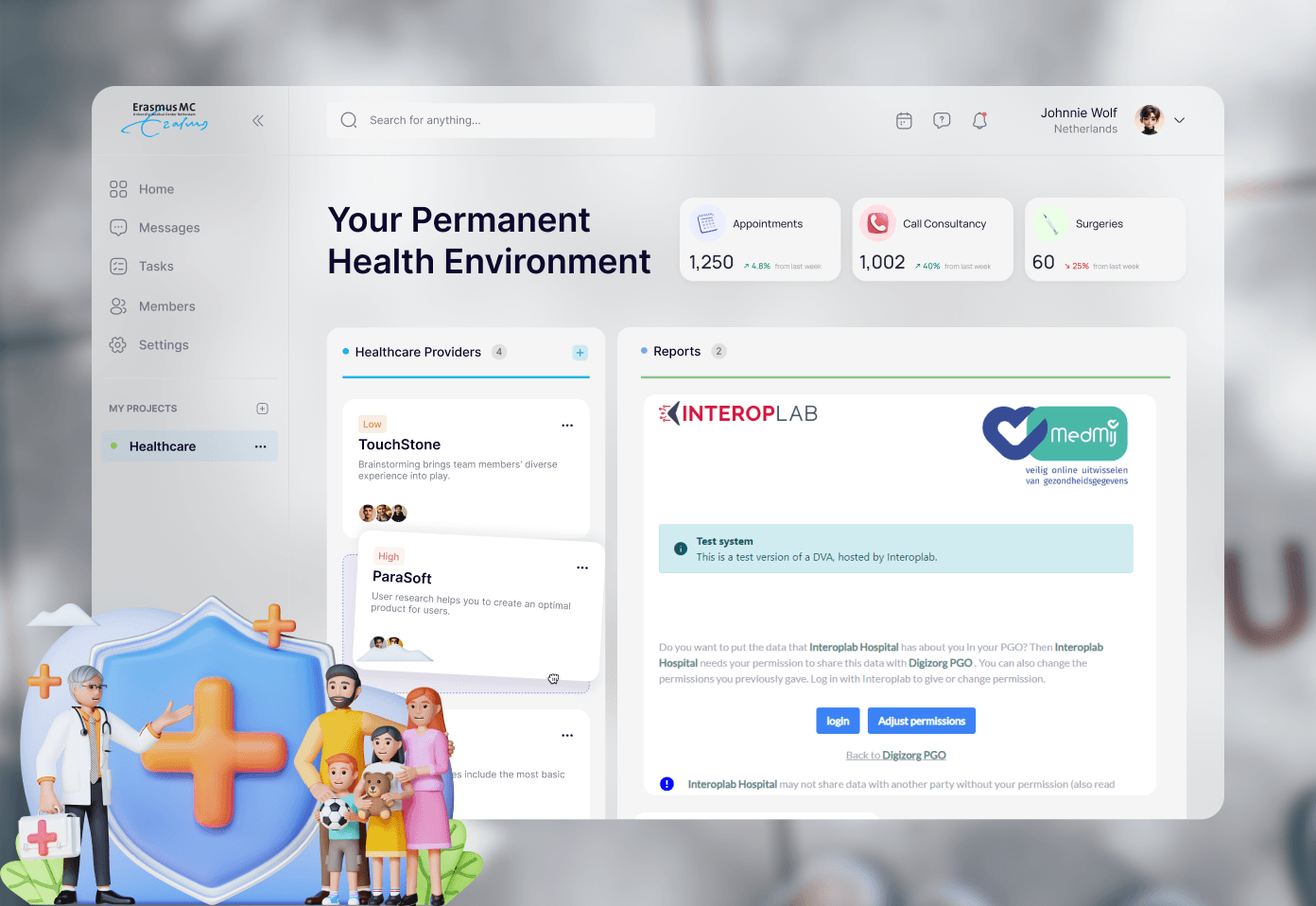
Project overview
Erasmus MC is Pioneering Healthcare Innovation. A leading medical center in Netherlands, renowned for groundbreaking research, advanced patient care, and comprehensive medical education. Built with high standards for performance, security, and intuitive user experiences, the platform is engineered to support mission-critical workflows and seamless scale.
What was the problem or pain point
Client Dilemma & Technical Bottleneck
Erasmus University Medical Center (Erasmus MC) in Rotterdam, one of Europe's largest academic medical centers, needed to streamline complex patient care pathways and clinical trial participant recruitment across multiple hospital departments. Clinical data was siloed inside proprietary Electronic Health Record (EHR) systems, forcing nurses and researchers to manually re-enter patient diagnostics, schedule appointments by telephone, and rely on paper consent forms for clinical studies, delaying trial start times and increasing administrative overhead.
What we suggested to the client
Solid Sphere Architectural Recommendation
Solid Sphere proposed building an interoperable clinical portal and patient engagement platform adhering to European healthcare standards. We recommended implementing an HL7 / FHIR integration layer that securely connects to the hospital's central EHR, enabling real-time clinical trial matching, digital e-consent collection, and an intuitive web portal for clinicians and patients to coordinate specialized treatment pathways.
What made this project challenging
Streamlining patient triage and multidisciplinary clinical workflows across Europe's largest medical center
Integrating disparate hospital information systems (HIS) without disrupting live patient care
Managing strict European patient privacy regulations (GDPR and NEN 7510 medical compliance)
Providing doctors with instant, consolidated clinical timelines during emergency ward handovers
What was implemented and how it was implemented
Step-by-Step Technical Execution
We engineered the clinical platform using React on the frontend and Node.js on the backend, containerized and deployed on the medical center's secure Kubernetes cluster. We implemented an HL7 v2 / FHIR (Fast Healthcare Interoperability Resources) translation engine that bi-directionally exchanges patient records, lab test results, and scheduling slots with the hospital's EHR core (Epic/ChipSoft). We built an automated clinical trial matching engine that screens eligible patients based on structured diagnostic criteria and lab values, alerting attending physicians to trial opportunities during routine consultations. Patients access a mobile-responsive portal where they can review educational videos, sign legally compliant digital e-consents, and complete patient-reported outcome measures (PROMs). All clinical data access was secured with role-based permissions, DigiD digital identity integration, and immutable audit logs meeting strict European GDPR and NEN 7510 medical data privacy standards.
How we delivered
Engineered unified clinical dashboard aggregating laboratory results, radiology reports, and vitals
Built secure FHIR-based API gateway connecting legacy hospital databases with modern web interfaces
Developed automated clinical pathway trackers assisting oncology and intensive care teams
Implemented biometric smartcard login supporting rapid clinician workstation switching
What did we use to implement it
Technology Stack & Technical Rationale
React delivered an accessible, clean clinical interface for both medical specialists and diverse patient cohorts. Node.js powered the high-speed FHIR data transformation middleware and clinical workflow engine. HL7 and FHIR protocols enabled standardized medical data interoperability with hospital EHR systems. PostgreSQL stored clinical trial parameters, consent timestamps, and workflow metadata with encryption. Docker and Kubernetes managed containerized deployments within the medical center's private cloud infrastructure.
Key outcomes
Deployed across 50+ specialized clinical departments
Over 300,000 patient records managed securely
Reduced clinical handoff documentation time by 40%
Full compliance with NEN 7510 and GDPR healthcare standards
Have a project like this?
Share your goals and constraints. We'll respond with next steps and a practical proposal.