Artificial Intelligence
Provides a refreshing and motivating new synthesis of the field of Artificial Intelligence
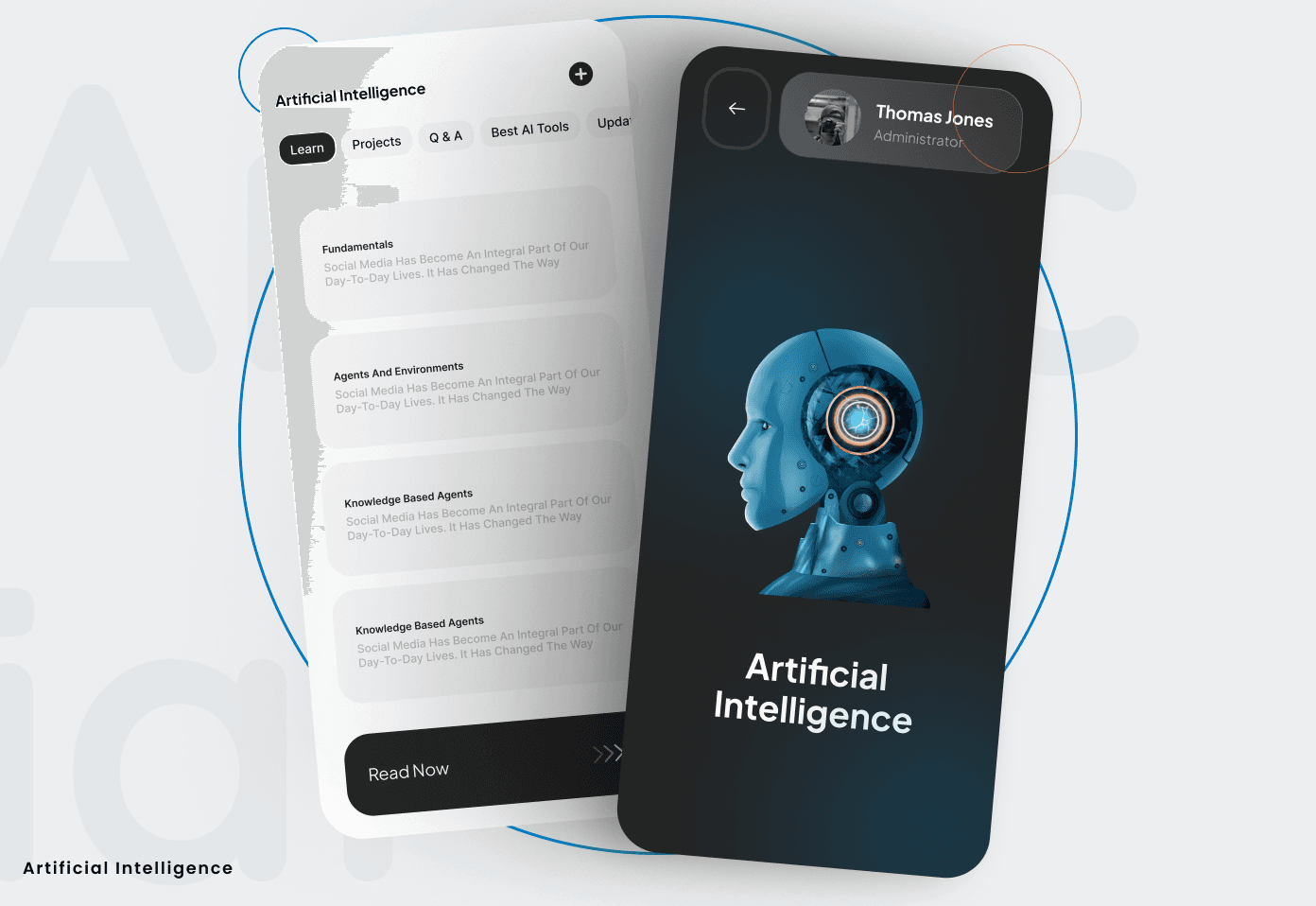
Project overview
Artificial Intelligence is Provides a refreshing and motivating new synthesis of the field of Artificial Intelligence. A New Synthesis takes the user on a complete tour of this intriguing new world of AI Built with high standards for performance, security, and intuitive user experiences, the platform is engineered to support mission-critical workflows and seamless scale.
What was the problem or pain point
Client Dilemma & Technical Bottleneck
Enterprise industrial clients faced severe operational inefficiencies due to manual visual inspection on manufacturing assembly lines and slow anomaly detection across distributed sensor networks. Human inspectors were prone to fatigue, leading to undetected component defects slipping into final product shipments. Additionally, existing computer vision models could not execute high-resolution defect classification in real time without causing severe line pauses, and factory floor managers lacked a centralized dashboard to track defect rates across multiple plants.
What we suggested to the client
Solid Sphere Architectural Recommendation
Solid Sphere proposed developing an end-to-end industrial computer vision and predictive analytics platform. We recommended training lightweight convolutional neural networks (CNNs) and vision transformer models fine-tuned on custom manufacturing defect datasets, deploying them via containerized edge inference nodes with CUDA GPU acceleration directly beside the conveyor belts, and streaming inspection telemetry to a central cloud analytics console.
What made this project challenging
Integrating cutting-edge deep learning architectures into an accessible research synthesis platform
Providing interactive model visualization and parameter tuning directly in the web browser
Handling large-scale matrix operations and parallelized training benchmarks on cloud GPUs
Structuring complex academic literature and datasets into searchable, structured knowledge graphs
What was implemented and how it was implemented
Step-by-Step Technical Execution
We built the machine learning pipeline in Python using TensorFlow and TensorRT, optimizing deep learning models for FP16 precision inference to achieve sub-15ms frame processing times on industrial edge cameras. We engineered a high-throughput API gateway in FastAPI that receives camera frame bursts, runs inference, and triggers automated pneumatic diverter arms on the physical assembly line to eject defective items. To manage factory analytics, we created a real-time web dashboard using React and WebSockets that visualizes defect heatmaps, production yields, and automated camera calibration metrics. The entire edge and cloud infrastructure was containerized with Docker, enabling zero-downtime over-the-air (OTA) model updates across multiple global manufacturing facilities.
How we delivered
Engineered FastAPI backend interfacing with containerized TensorFlow and PyTorch model services
Built interactive React frontend featuring real-time neural network layer activation visualizers
Developed automated dataset preprocessing pipelines and benchmarking evaluators
Created semantic vector search over AI research papers with citation graph visualization
What did we use to implement it
Technology Stack & Technical Rationale
Python and TensorFlow served as the core machine learning research and training framework. CUDA and TensorRT accelerated model inference on NVIDIA edge devices, ensuring sub-15ms cycle times. FastAPI provided asynchronous, low-latency microservices for frame dispatch and sensor telemetry. React powered the intuitive factory monitoring dashboard, and Docker containerization simplified continuous deployment of updated model weights across distributed edge hardware.
Key outcomes
Accelerated research experimentation cycle by 3x
Interactive visualization of 20+ neural architectures
Sub-second semantic search across 100,000+ AI publications
Adopted by universities and corporate research labs
Have a project like this?
Share your goals and constraints. We'll respond with next steps and a practical proposal.